

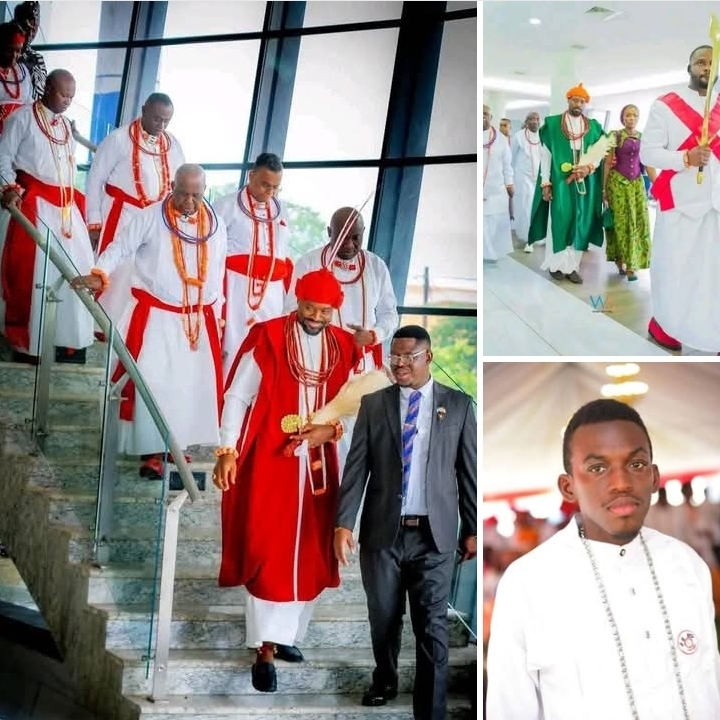
Ologbotsere’s Aide, Comr. Eboma Tuoyo Michael, Champions the Enduring Legacy of Respect in Preserving the Throne and Ojoyes
Itsekiri nation stands as one of Nigeria’s most unique, historically grounded and culturally sophisticated ethnic nationalities in the country. From its early coastal settlements along the Niger Delta to its invaluable role in trade and diplomacy, the Itsekiri people have long woven their identity around reverence for a beautiful cultural tradition, pragmatic leadership, and firm orderliness. Central to this enduring ethos is respect and great regard for the monarch i.e His Majesty, Ogiame Atuwatse III CFR, the Olu of Warri and the Ojoye’s (chiefs), led by the Chairman, Warri Council of Chiefs, Chief Engr. Dr. Oma Eyewuoma, the Ologbotsere of Warri symbols not merely of authority, but of divine continuity, natural spirituality, and communal harmony. For centuries, the Itsekiri monarchy has remained a bastion of cultural resilience, embodying a delicate blend of governance, spirituality, and moral order.
In the traditional Itsekiri worldview, the throne is more than an institution; it is the living soul of Itsekiri’s worldwide. The Olu of Warri, as the custodian of the kingdom’s destiny, anchors the collective consciousness of the Itsekiri, while the Ojoye’s i.e Chiefs serve as pillars of governance and custodians of justice. Together, they have upheld peace, fostered stability, and sustained a cultural system that predates colonial intrusion. Respect for these institutions is therefore not ceremonial; it is an affirmation of identity, a moral compass guiding behavior, and a defining feature of Itsekiri civilization.
Yet, this noble heritage now faces an unsettling strain. The rise of social media and the erosion of communal values have emboldened voices that trivialize once-sacrosanct traditions. What was once treated with awe and dignity is now subjected to ridicule and public irreverence. Such acts, often borne out of ignorance or the misapplication of modern freedoms, threaten to fracture the very moral foundation upon which the Itsekiri nation was built. The danger lies not merely in the loss of respect but in the gradual unmooring of a people from their cultural center.
To counter this drift, there must be a collective reawakeninga and a conscious effort to reassert the value of respect within the Itsekiri consciousness. The younger generation, particularly, must be educated to understand that the Olu of Warri and Ojoye’s embody the living archive of their people’s history, spirituality, and moral compass. Respect for traditional institutions does not negate modernity; rather, it anchors progress within the framework of cultural dignity and self-knowledge. Every Itsekiri; at home and in the diaspora must recognize that safeguarding these institutions is synonymous with safeguarding the future.
In the final analysis, the preservation of the prestigious Itsekiri throne and its Ojoye’s(Chiefs) grows beyond ritual homage; it is an act of cultural survival. A people who forget the sanctity of their symbols risk losing the moral language that defines them. For Warri Kingdom to continue to thrive as a springboard of unity and identity, Itsekiri sons and daughters must recommit to the ethics of respect that has sustained their ancestors. The enduring legacy of the Itsekiri will depend on how faithfully and committed they preserve the dignity of the throne and the wisdom of their Ojoye’s in an age that too easily forgets the value of reverence.









Leave a Reply